Q1 2026 Claims Platform Updates, Evolutions, and Feature Releases
Expanding complete data capture across varied levels of complexity
%20(1).jpg)
Deepening Claim Context Through Richer Data Capture
Accurate claims handling depends on having complete, granular context at every stage, and gaps in that data mean adjusters are working without the full picture. We've expanded data warehouse schemas with new fields spanning claim parties, injuries, liability determinations, property incidents, and geographic detail. Claims, analytics, and SIU teams gain a more queryable view of each claim without additional manual entry.
More Complete and Accurate Policy Data on the Claim
Policy data is rarely perfect at first notice of loss. Records arrive with minor gaps, and party roles don't always map neatly to standard types. Snapsheet expanded its robust policy role support so a wider range of individuals and organizations flow directly onto claims as claim parties, and refined how imperfect data is handled so all valid data is retained even when non-critical errors are present, while critical errors still appropriately block claim creation. This reduces the need for manual re-entry, provides a more complete view of the parties on a claim, and delivers stronger consistency between what adjusters see and what's stored in the data warehouse.
Reducing Friction and Error at Data Entry
Accurate exposure classification starts at the point of entry. For environments that support both Bodily Injury and PIP/Med Pay exposures, Snapsheet now prompts users to actively select the injured-person exposure type rather than carrying a preset default to further reinforce deliberate, accurate data capture that reflects the specific nature of each claim.
Learn more about the Snapsheet Open Architecture here.
Sharpening financial traceability across the lifecycle
.jpg)
Financial data across claims is only as valuable as it is accessible. Snapsheet moved recovery method tracking onto recoveries themselves and extended payment-reason itemization to recoveries, while new refund creation links every refund back to its originating payment and automatically updates claim and exposure costs. "Okay to Pay" controls hold payments until total losses and estimates are cleared, and consolidated payee records give finance and reporting teams a single, authoritative audit trail across the entire transaction lifecycle.
Explore how integrated financials operate on the platform here.
Automating on the details that drive claim decisions
%20(1).jpg)
Expanding the data workflows can act on in real-time
The more precisely workflows can respond to the specifics of a claim, the more routine tasks automation can take off adjusters’ plates. The individual data points available as workflow triggers were expanded in three core areas.
- Percent at Fault and Responsible Party conditions let workflows act on liability determinations faster, especially in split-liability and subrogation scenarios.
- Incident location is actionable through a new Claim Incident Zip Code Updated event and Claim Incident Territory attribute.
- A new set of injured-person events and attributes covering injury description, fatal injury, ambulance transport, seatbelt use, lost wages, and treatment enables workflows to trigger different next steps for Bodily Injury exposures based on those detailed values.
Time-based escalation that continues up the chain
A single escalation isn't always enough to move the needle on a stalled task. With multi-level Repeat Task Escalation, incomplete tasks can be automatically moved up their defined hierarchy when not completed within a designated timeframe. Priorities stay at the top of the queue without the need for adjusters to chase down admins and send multiple reminder emails.
Learn more about the No-Code Workflow Engine that powers the Snapsheet platform.
Equipping adjusters with instant access to deeper claim context
.jpg)
Better Visibility into Attorney Representation
When applicable attorney data is missing from a claim, adjusters risk communicating incorrectly or inadvertently creating compliance gaps. Snapsheet added both a visual indicator to flag attorney representation at first glance and an automatic warning when a party is marked as represented, but no attorney contact is found. When attorney information is received it’s automatically added directly to the claim party and immediately available to adjusters.
Faster navigation for adjusters working multiple fast-paced files
Slow access to recent claim activity and constant backtracking creates friction for adjusters that need to move quickly. Global search now instantly returns the 10 most recently viewed claims unique to the user for a one-click ‘back to recent work’ experience
More Consistent and Connected Data
Accurate claim outcomes depend on visibility into who handles what, including vendors and external parties.
- Dedicated Inspection Details card for vehicle inspection assignments give better visibility into how work is progressing on auto repairs
- Appraisers can be assigned and tracked across individual estimates, inspections, and valuations.
- Vendor profiles and their assignments can be created directly from the Contacts view without navigating out of the claim file.

Extending communication capabilities to meet policyholders where they are
%20(1).jpg)
We're Bringing Faxin' Back
Faxing remains one of the most relied on communication channels in claims, especially for litigation processes or compliance-heavy documents. Faxes are back in the Claims Platform as an available feature within the Quick Access Panel in the Claim View, or they can be triggered automatically within workflows. Recipients can be directly selected, and documents and files can be attached. A new "Fax" contact method type allows fax numbers to be saved in a claim party's contact information. Sent faxes are recorded in both the claim's and exposure's history and within Photos & Documents for dual-access.
Clearer Communication for Global Markets
Fragmented message history makes it harder to follow a conversation. Snapsheet introduced unified international SMS conversation threads for global territories like Australia into a single thread, accounting for variation in leading numbers when it doesn't affect phone number validity. This included merging any previously split conversations into a single thread per claim party rather than scattered exchanges.
Take a deeper look at omnichannel communications on Snapsheet here.
More data, less problems
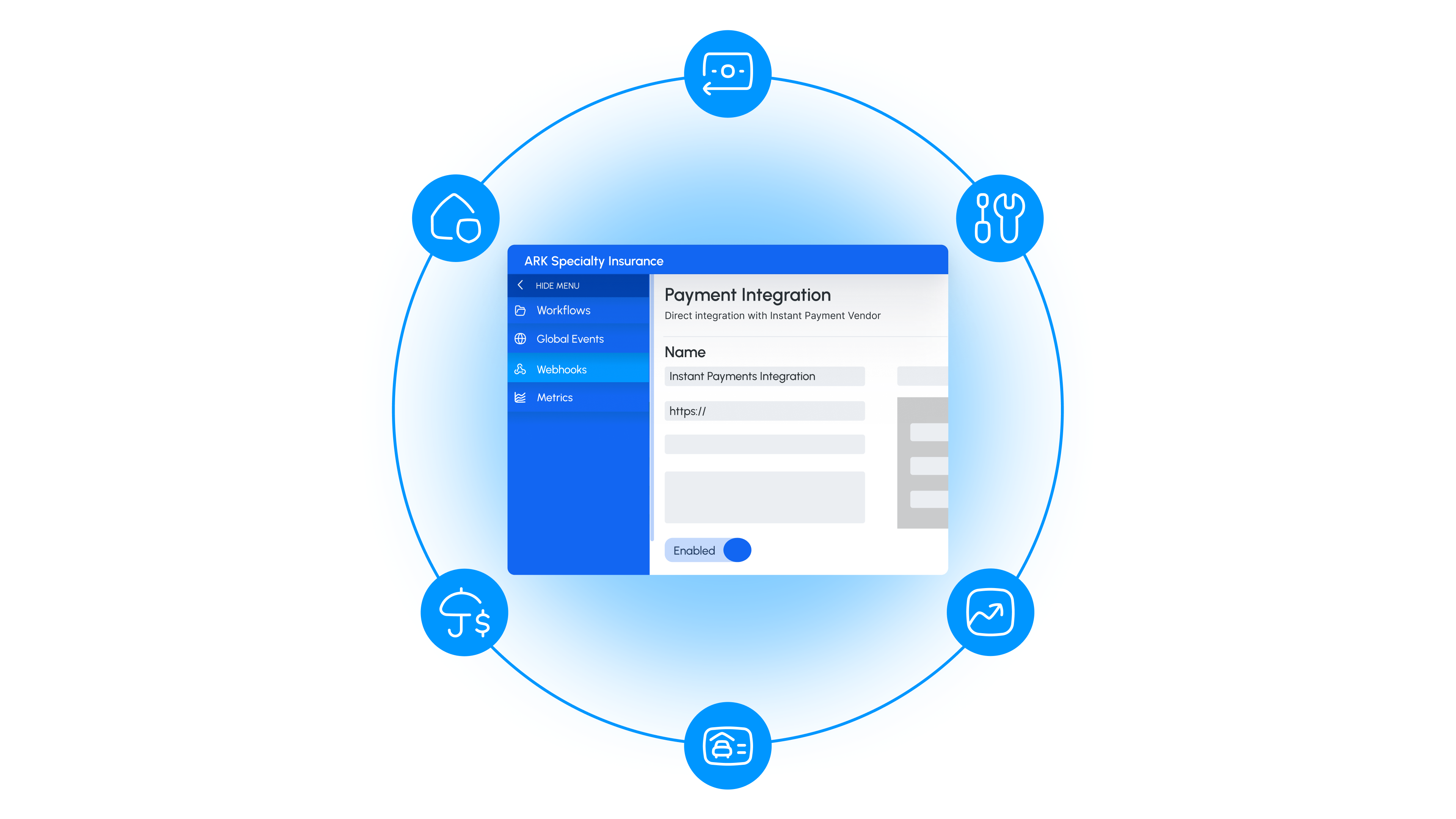
Opening up access to policy data without increasing riskAccurate policy data at every stage of the claim lifecycle is crucial for sound outcomes, but when real-time updates cause downstream effects to base or multi-account policies, the value gets diluted. Snapsheet enhanced its Policy Webhook to fetch policy data tied to specific claim numbers or accounts to support more flexible, targeted data access without introducing those risks.
Continued improvements to the industry’s leading ISO integrationSnapsheet's direct ClaimSearch integration is a standout in the industry as an automated alternative to the historically tedious, manual task of ISO reporting. With the added ability to include injury details for all injury exposures—alongside refined third-party property and VIN handling that bypasses the VIN requirement when it isn't applicable or required under ISO guidelines—reporting continues to require less manual oversight without creating accuracy concerns.
Increased security that doesn’t mean more hoops to jump through
%20(1).jpg)
Secure access to more vendor data from the same centralized system
The standout ability to access vendor and partner portals directly from the claim file via External Links now removes the need for users to continuously validate their credentials to leverage it. Each embedded request carries the launching user’s permission and identity to preserve compliance without requiring tedious steps.
Claim-critical vendor data like tax identification numbers are now displayed, searched, and protected based on ID type to keep sensitive identifiers like SSNs secured while making EINs more accessible for adjusters coordinating multiple vendors across their queue.
Adjusting to evolving regulatory requirements for payments
Payments carry real regulatory and legal exposure. Snapsheet added automated coverage-type and loss-state attribution to One Inc payment payloads to meet state compliance requirements and mitigate bad-faith risk.
OFAC screening now validates geographic data to reduce false-positive matches so teams can clear payments faster without sacrificing compliance.
Making Login protection resilient against automated abuse
The login page is the platform's front door, and protecting it against automated abuse safeguards every account behind it. Snapsheet strengthened its reCAPTCHA protection to guard logins earlier in the page load, closing the window automated tools rely on before a page fully renders.
A functional framework for MFA
Rolling out multi-factor authentication succeeds or stalls on whether administrators can support users through it, especially when someone loses access to their auth app. Snapsheet added a User Auth App Reset permission that lets designated admins reset another user's MFA auth app for account recovery, along with a Multi-Factor Authentication Admin permission set to house it. This permission activates once MFA is enabled, positioning teams to manage authentication and recovery from day one.